Where Should You Invest During a Global Conflict?
Where Should You Invest During a Global Conflict?
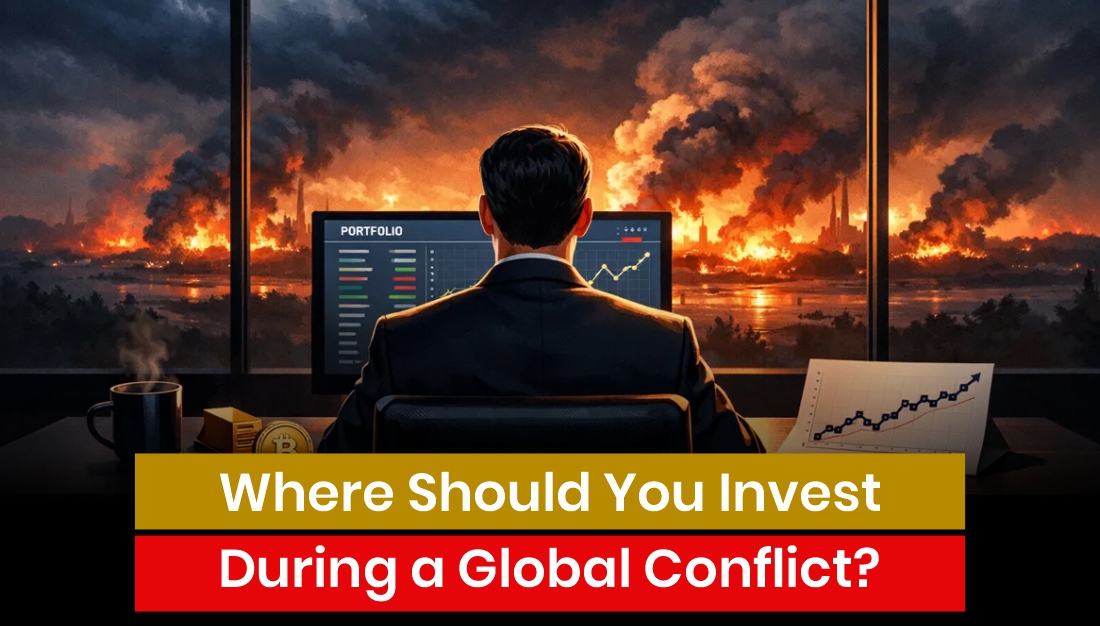
International disputes like the tension between Iran result in the uncertainty in financial markets and investors do not know where to invest. War-related news, oil price volatility and economic volatility can cause markets to be unpredictable and volatile. Though this doubt is discomforting, it is also an opportunity to investors who know how various asset classes perform in such instances. The point is that it is not to respond emotionally but to act according to a strict and thought-through approach to investments.
Understanding Market Impact
Geopolitical tensions have various significant effects on the world markets. Among the short-term impacts, oil prices are affected. The supply disruptions that are feared when the conflicts arise in the areas that are major sources of global energy like the Middle East drive up the oil prices. The cost of transportation and production can go up due to rising oil prices and this can bring about inflation.
Inflation in its turn impacts the interest rates, the consumer spending and the entire economy growth. Uncertainty might have a deteriorating effect in the short term on stock markets and safe-haven assets are more likely to be pursued. It also affects the currency market where investors tend to shift towards safe and stronger currencies during such uncertain periods.
Knowledge of such links will enable investors to make decisions as opposed to responding to headlines.
Invest in Defensive Assets
In times of uncertainty, a shift in the focus of the investors is usually of the defensive or safer assets. Those investments are meant to hedge capital and offer stability in the fluctuating market.
Gold has always been regarded as a safe haven. It has the tendency of doing well in times of crisis since it is regarded as a store of value by investors. Likewise, the returns of debt instruments like bonds or fixed-income funds are comparatively less risky and have relatively stable returns when compared to equities.
Another good alternative is high quality and diversified portfolios of mutual funds. The investments are diversified in various sectors and classes, which minimize risk. Defensive assets are important in ensuring the balance and defense of wealth at an uncertain period.
Focus on Defensive Sectors
Global conflicts do not have equal impacts in all sectors. There are other industries that are stable since they offer basic needs and services that individuals require irrespective of economic times.
In the FMCG industry, the transactions are of everyday goods including food and domestic items. The demand for such items does not fall even in economic uncertainty. Another sector that remains unaffected by the crisis is healthcare since medical needs do not decrease in times of crisis. Other services like electricity and water services remain in constant demand.
Opportunities in Commodities
Commodity markets have some opportunities brought about by geopolitical confrontations, particularly that of oil. The supply of oil is very concentrated within some few areas thus any unrest may result in a drastic rise in prices. This will have a positive impact on energy firms and industries.
But commodity investments should be cautious. Prices may be very unpredictable and political developments may affect them hence risky to an inexperienced investor. Rather than exposure, investors can take the advisory funds or sector funds that are investing in the energy companies.
Commodities have the potential of being used as a protection against inflation though not as the entire focus of a diversified portfolio.
Diversify Across Assets and Regions
The diversification is even more essential in the global conflicts. Depending on one type of asset or region is risky. Investors can diffusion of investments to various asset classes including equities, debt and commodities to minimize the effects of market volatility.
It is also essential in geographical diversification. The impact of conflicts on the regions is different, and it is possible to stabilize the situation by investing in international markets. As an illustration, one region can be struggling economically, but another can be either stable or even gain.
Avoid High-Risk Speculation
When the market is volatile, numerous investors are lured into the quick-profit-making business by investing into the trending stocks or speculative assets. This can be risky and particularly in the turbulent periods where market trends are unstable.
Speculative investments are not very sound in terms of fundamentals as well as they are influenced by the short term trends. Although they might be useful in providing short-term profits, they also face high chances of losses. It is preferable to concentrate on core competent investments with prospects of long term returns.
Use Mutual Funds for Stability
One of the sure investment choices in the times of uncertainty is a mutual fund. They offer diversification, professional management and ease in investment.
The SIP (Systematic Investment Plan) comes in handy especially in volatile markets. It enables the investors to invest a constant value at a period irrespective of the market environment. The strategy will assist in averaging the expenses and mitigating the effect of market fluctuations.
It can be a good idea to keep making SIP investments even in the bad times of the market, because in this way you are able to get more units at a lower price.
Keep a Long-Term Perspective
The long-term perspective is one of the most significant rules of investment in the times of global conflict. Markets are likely to respond negatively in the short term, yet in the long term history has proven that it will recuperate.
Short-term oriented investors are usually emotional investors, including panic selling, or trend following. Such activities may damage long term returns. Conversely, investors who do not change their minds are more likely to make their financial objectives. The market will never be timed but time in the market is always significant.
Review and Adjust Portfolio
Though you should remain invested, it is also important to review your portfolio on a regular basis. Make sure that you have your investments fitted to your financial goals and risk tolerance. The times of uncertainty might require a few small changes in order to keep the balance.
Nevertheless, do not change very often according to the temporary market trends. The problem of over-adjusting your portfolio may cause unnecessary expenses and lower returns. It is better to use a disciplined and strategic approach.
Build an Emergency Fund
One of the most neglected factors in crisis investing is that financial backup is strong. An emergency fund will make sure that you will not be forced to withdraw your investments when the markets are down. This will enable your investments to rebound and increase with time.
Conclusion
The best investment strategy in a global conflict is nonexistent. The trick is to have a diversified and balanced portfolio. Dwelling on defensive assets, stable areas and long-term growth prospects. Never make emotional judgments and speculation.
Mutual FundInvestmentWealth CreationCompoundingSIP