
Which is more important: Emergency Fund or Investment?
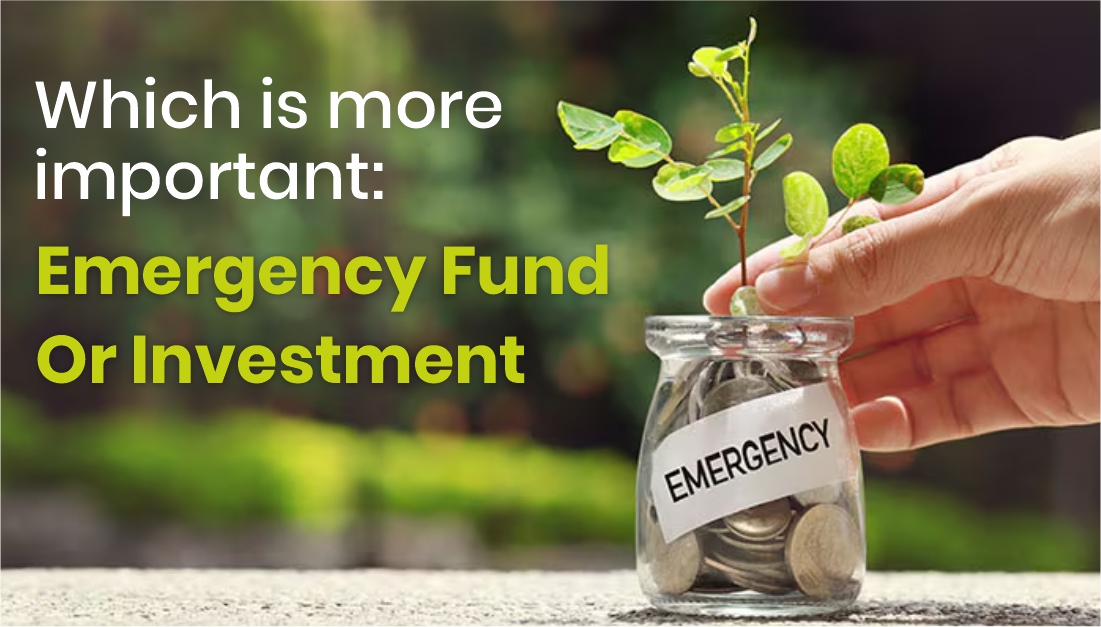
Which is more important: Emergency Fund or Investment?
The biggest dilemma that people encounter in the process of financial planning is whether to invest at once or create an emergency fund. Although they are both important elements of a robust financial base, knowledge of their functions and priorities can assist you to make wiser choices.
Most people get into investments without planning on how to deal with situations that arise without prior planning. This usually causes financial stress in case of impending emergencies and makes them withdraw investments at an early age. In order to prevent this, it is necessary to distinctly comprehend the distinction between investments and emergency fund.
What is an Emergency Fund?
Emergency fund refers to a pockets of money that is saved to take care of unforeseen costs like medical crises, loss of employment, emergency repairs, or emergency financial needs. It serves as a financial security net which safeguards you against debt and financial instability.
Ideally, you should have enough money in the form of an emergency fund that will sustain you at least 3-6 months. This will make sure that even in hard times you will be able to keep your lifestyle.
What Are Investments?
Investments refer to assets or investments in which you place money hoping to receive returns in the future. These are stocks, mutual funds, real estate and bonds.
Investments are not supposed to be accessed immediately as is the case with an emergency fund. They are geared towards financial growth and wealth creation.
Major Differences between the Emergency Fund and Investment.
1. Purpose
The first benefit of emergency fund is safety and liquidity and the second is investment is directed at growth and returns.
2. Risk Level
Emergency money is stored in low-risk securities like savings account or liquid funds. Investments on the other hand can have different degrees of risk based on the type of asset.
3. Accessibility
Emergency funds are supposed to be readily available any time. The investments can be less liquid with lock-in periods or market dependence.
The Reason Why Emergency Fund is First.
The first thing that you should do before investing is to create an emergency fund. In its absence, any monetary crisis will hinder your investment plans.
Considering the example, when you put all your money in the stock market and then have to pay an urgent expense, then you might have to sell your investments at a loss. This kills the aim of long-term investing.
The advantages of having an emergency fund are that your investments are not used up and can still grow with time.
How to Emergency Fund.
Step 1: Find Monthly Costs.
The first step is to determine your basic monthly needs, such as rent, groceries, bills, and transportation.
Step 2: Establish an amount to be raised.
Estimate the size of your emergency fund by multiplying by 3 to 6 months your monthly expenses.
Step 3: Save Gradually
You do not have to accumulate your emergency fund in a day. Save some of your earnings on a regular basis until you achieve your goal.
Step 4: Select the appropriate Place.
Stock your emergency fund in either a savings account or liquid mutual fund which is both liquid and safe.
When To Invest?
When you already have a simple emergency fund (3 months of spending), you can begin to invest in small steps. This will enable you to strike the balance between safety and growth.
You can start with less risky investments such as mutual funds and then venture into more risky investments such as stocks when you become more confident.
Scheduling Emergency Fund and Investments.
Financial planning is not about deciding between the two, it is about balancing the two.
An ingenious method is:
Establish your emergency fund.
Small investments and start with.
Keep on increasing the amount that you invest.
This will see you being ready in the event of an emergency and you are also working on wealth creation.
Mistakes to Be Wary of.
The fact is that many individuals commit a common mistake of not paying attention to emergency funds but paying attention to investments only. Others maintain excess money in savings without investment to grow.
The Main Errors Are:
Gambling without insurance.
Using emergency funds for non-emergencies
Retention of emergency funds in risky assets.
Delaying investments unnecessarily
These are some of the mistakes that can be avoided in order to be much more financially stable.
Why This is Important in 2026.
As the economic situation becomes more unpredictable, job markets grow in ups and downs, and the cost of living is soaring, a solid financial base is needed more than ever before.
Emergency fund gives you a sense of security and investments enable you to increase your wealth. The two make each other a complete and safe financial future.
Conclusion
Both emergency funds and investments are vital in the financial planning, however it is important to put the right priority on them. Begin with creating a strong emergency fund and then proceed with systematic investments.
Not only will this strategy cushion you against future financial hiccups but it will also guarantee a gradual financial growth in the long run.
emergency fund vs investmentfinancial planning Indiahow to build emergency fundinvestment planning tipssavings vs investmentliquid funds Indiapersonal finance tipsrisk management financemoney management strategies